New school cohort · April 2027
Make your Inclusive Mainstream Fund matter for the long term.
Looking for a lasting investment in inclusion? We help schools and academy trusts adapt learning for every child — and work alongside your staff to make it successful.
- SEND
- EAL
- Reading & writing support
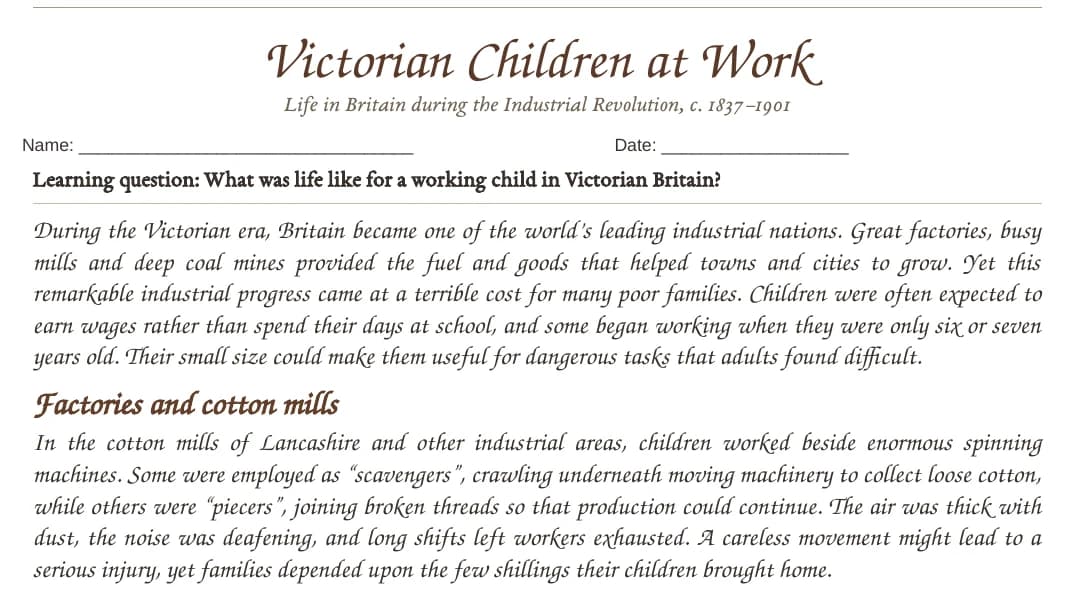
Year 5 · History · as written

Adapted for Wolfgang
Simpler words · larger text
Factories and cotton mills
In the cotton mills, children worked next to big spinning machines. Some were scavengers. They crawled under machines to pick up cotton. Others were piecers. They fixed broken threads so the machines could keep working. The air was full of dust, and it was very loud.
Adapted for Claude
Simplified · purple pages
Factories and Cotton Mills
In cotton mills in places like Lancashire, children worked near huge spinning machines. Some were called "scavengers"; they crawled under machines to pick up loose cotton. Others were "piecers"; they fixed broken threads so the work could continue.
Adapted for George
Original words · blue pages
Factories and cotton mills
In the cotton mills of Lancashire and other industrial areas, children worked beside enormous spinning machines. Some were employed as "scavengers", crawling underneath moving machinery to collect loose cotton, while others were "piecers", joining broken threads so that production could continue.
Adapted for Franz
Adjusted text · more space
Factories and cotton mills
In cotton mills in places like Lancashire, children worked near big spinning machines. Some children were called "scavengers". They crawled under machines to pick up loose cotton. Others were "piecers". They joined broken threads so machines could keep working.
1 of 12
Selected to participate in the EdTech Evidence Board pilot
Adaptify was one of 12 products included in the Department for Education-funded pilot, delivered by the Chartered College of Teaching. We value scrutiny, learning and evidence-informed product development.
- Built for inclusive classrooms
- Developed by teachers and inclusion specialists
- Ongoing implementation support
We don't just hand over software and walk away.
Buying the right tool is only the beginning. We work with your school to understand your curriculum and how we can enhance it, plan implementation, build staff confidence and review what's working — so your investment continues to deliver value.
- 01Explore
Understand your needs
We look at your existing resources, pupil needs and priorities to identify where Adaptify can enhance your Inclusion Strategy.
- 02Prepare
Plan together
We make sure you get the most of your subscription by preparing your implementation strategy based on your school's needs.
- 03Deliver
Embed in teaching
We work alongside school leaders and teachers to embed Adaptify into everyday classroom routines and resource planning.
- 04Sustain
Keep improving
Regular check-ins and ongoing access to our CPD webinars help your school embed good practice and get ongoing value.
Our approach is informed by the EEF's Explore → Prepare → Deliver → Sustain implementation guidance.
Our current school cohort is full.
Demand from schools has reached our current onboarding capacity. To maintain the quality of our training and support, while allowing schools to include us in their Inclusion Strategy, we're now opening spaces for schools and academy trusts to reserve an April 2027 onboarding place.
Make your funding go further
Make Adaptify part of your Inclusion Strategy.
Already planning how to use your Inclusive Mainstream Fund? We'll work with you to identify the barriers your pupils face and show how Adaptify could support your priorities for adaptive teaching and access to the curriculum.
- Align the use of Adaptify with your school's identified learning barriers and priorities.
- Help articulate the intended activities, outcomes and budgeted costs within your Inclusion Strategy.
- Agree a realistic plan for staff training, implementation and longer-term review.
Funding decisions and eligibility remain the responsibility of each school or trust under the DfE's grant conditions.
Your school's Inclusion Strategy
2026–27- Identified barriers to learning & participation
- Evidence-informed inclusive teaching
- Adaptations for SEND, EAL & literacy
- Planned activities & intended outcomes
- Budgeted costs & review plan
How it works
See Adaptify in action
See the difference
One resource, personalised for every learner
The same worksheet — automatically adapted to each student’s reading level, formatting, and accessibility needs.
Volcanoes
How do volcanoes form and why do they erupt?
Year 5 — Geography

Composite volcano
Volcanic eruptions occur when magma from beneath the Earth's crust rises to the surface. The magma, driven by pressure and gas, forces its way through vents and fissures. Upon reaching the surface it becomes lava, which can flow for kilometres, reshaping the landscape. There are three main types of volcano: shield volcanoes, which have gentle slopes and produce runny lava; composite volcanoes, which are steep-sided and often explosive; and cinder cones, the smallest type, built from fragments of lava blown into the air.

Around 1,500 active volcanoes worldwide. 75% sit in the Ring of Fire.
The word “volcano” comes from Vulcan, the Roman god of fire. The largest volcano in our solar system is Olympus Mons on Mars — nearly three times the height of Everest!
Composite volcano
Volcanic eruptions occur when magma from beneath the Earth’s crust rises to the surface. The magma, driven by pressure and gas, forces its way through vents and fissures. Upon reaching the surface it becomes lava, which can flow for kilometres, reshaping the landscape. There are three main types of volcano: shield volcanoes, which have gentle slopes and produce runny lava; composite volcanoes, which are steep-sided and often explosive; and cinder cones, the smallest type, built from fragments of lava blown into the air.
Teacher tip
Ask pupils to label each type of volcano in their exercise books.
Most of the world’s active volcanoes are found along the Pacific Ring of Fire, a horseshoe-shaped zone stretching 40,000 km around the Pacific Ocean. Volcanoes can also form at hot spots, where plumes of magma rise from deep within the Earth’s mantle. When a volcano erupts explosively, it can send clouds of ash and gas high into the atmosphere, affecting weather patterns across the globe.
Around 1,500 active volcanoes worldwide. 75% sit in the Ring of Fire.
The word “volcano” comes from Vulcan, the Roman god of fire. The largest volcano in our solar system is Olympus Mons on Mars — nearly three times the height of Everest!
When resources match the learner, they’re more willing to start — and more likely to finish.
Try it with your own worksheetInclusion that reaches the whole class
More pupils included. Less time spent adapting.
Adaptify turns existing teaching materials into accessible, personalised resources and scaffolds — making adaptive teaching straightforward in every lesson.
SEND
Adapt text presentation and reading demands to support learners with additional needs.
EAL
Help pupils access subject vocabulary and classroom content.
Reading
Adjust readability, layout and language without creating resources from scratch.
Writing
Give pupils starting points with useful vocabulary and structured scaffolds.
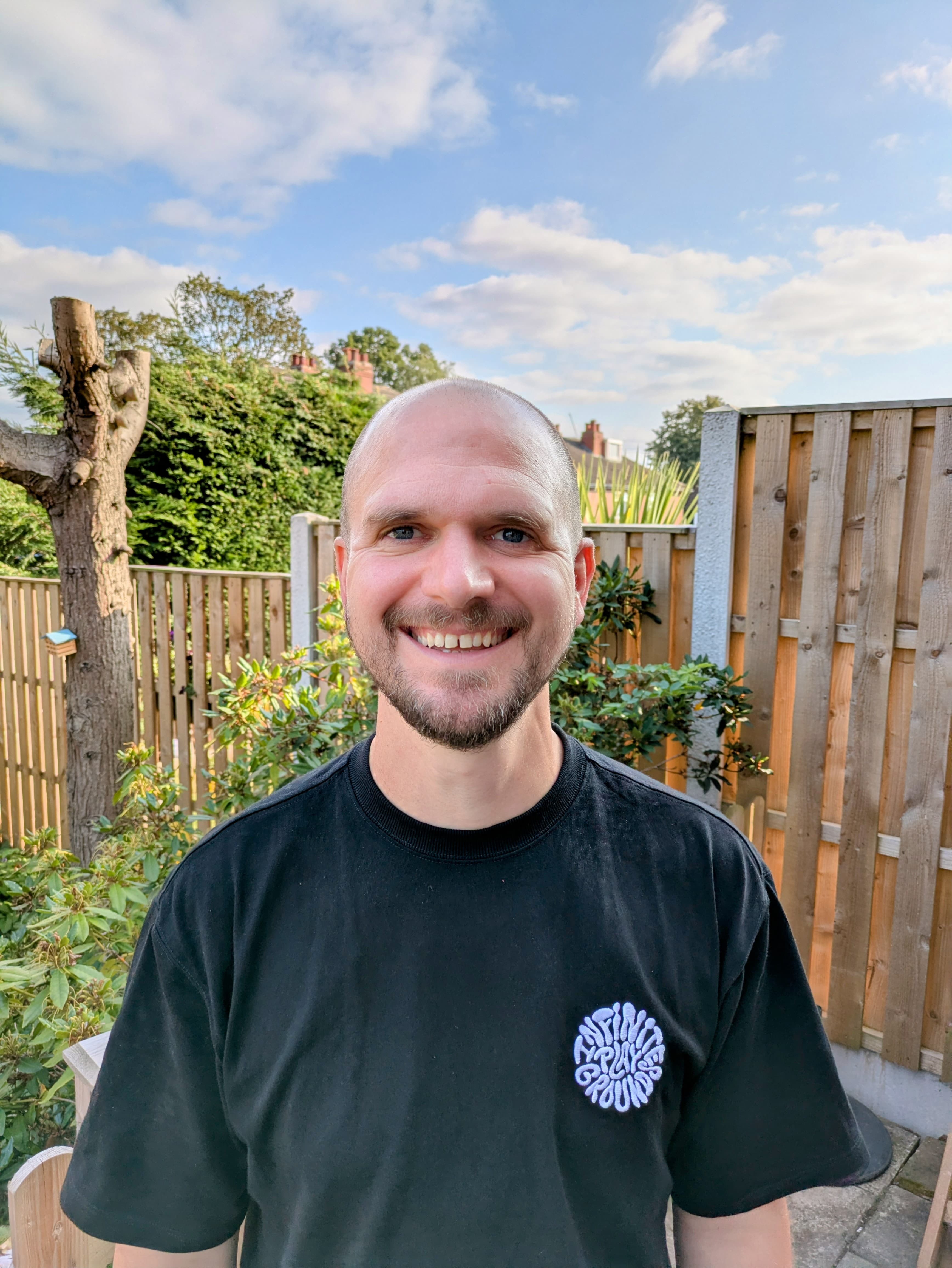
Built by a teacher
The person who built this still teaches
Danny was diagnosed with dyslexia as an adult, which helped him understand why he had struggled with reading and writing at school. Now, as a primary school teacher and leader of writing in a large school in Leeds, he sees the same fear and difficulties he experienced reflected on the faces of children in his classes. Children struggle to read texts, keep up with peers, stay organised and complete writing tasks. As children move through school, these difficulties continue and the attainment gap widens.
Danny has seen how difficult it is for teachers to provide everything that dyslexic children need to be successful in the classroom due to limited resources and time. Teachers do everything they can, but providing exactly what dyslexic children need feels impossible, and that is before accounting for children who have EAL and other needs.
By creating Adaptify Education, Danny has found a way to easily give children with learning differences exactly what they need, quickly and consistently. In his classroom, self-esteem is up, behaviour difficulties have plummeted and children’s confidence in reading and writing is feeding through into other subjects like maths. Danny is sharing this with other teachers who are seeing the same impact. Children who were quiet, disengaged or completing lower-level work are now included in class discussions and learning.
April 2027 cohort · Now open for enquiries
Your next step towards lasting inclusion starts here.
Tell us about your school. We'll discuss your priorities, explore how Adaptify could fit your Inclusion Strategy and explain the next steps for joining our April 2027 cohort.
No commitment required to make an enquiry.